Breakthrough Spinal Cord Tissue Implants Show 80% Success Rate in Paralysis Treatment
Revolutionary research from Tel Aviv University achieves remarkable success treating paralysis with engineered spinal cord tissue implants, offering hope for millions with spinal cord injuries.
Breakthrough research from Tel Aviv University's Sagol Center for Regenerative Biotechnology has achieved remarkable success in treating paralysis through innovative spinal cord tissue implants. The first tests on mice have shown 80% success rates, offering unprecedented hope for millions of people worldwide living with spinal cord injuries.
Revolutionary Tissue Engineering Approach
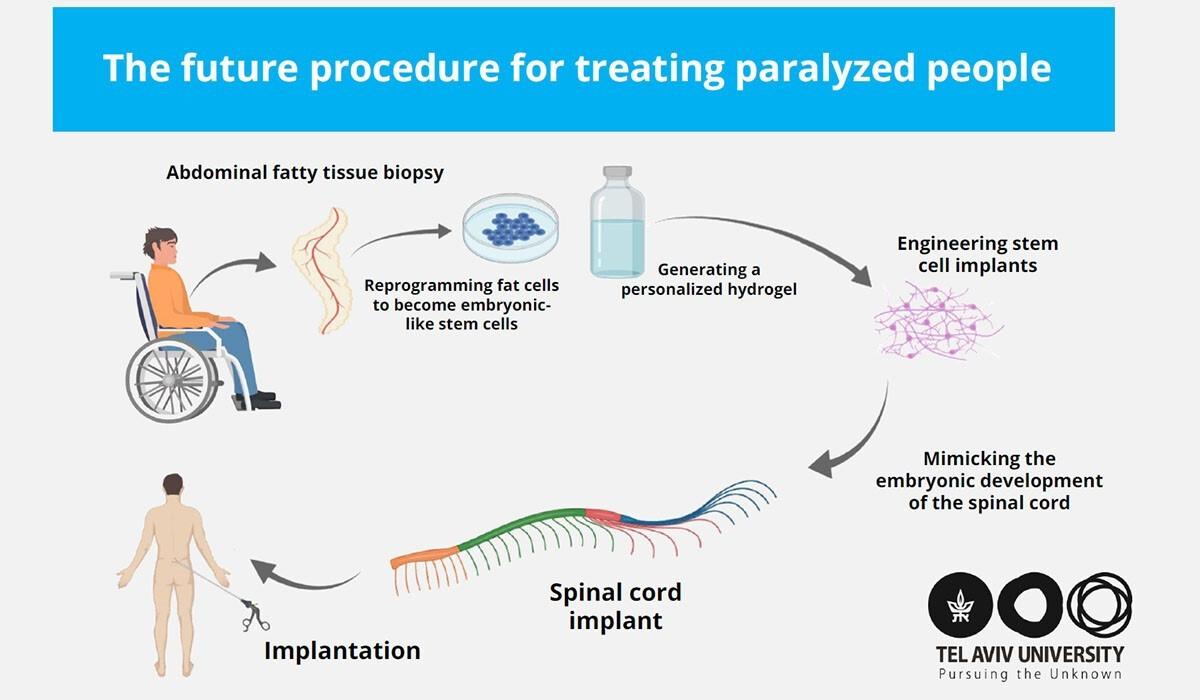
This groundbreaking technology represents the first successful implementation of functional spinal cord tissue implants that the body naturally assimilates. Led by Professor Tal Dvir, the research team has developed a method that begins with a simple biopsy of the patient's adipose tissue from the abdomen, making it a minimally invasive starting point for treatment.
The process involves sophisticated genetic engineering techniques to reprogram the harvested cells, returning them to a state resembling embryonic stem cells. These pluripotent cells can differentiate into any type of cell in the body, providing the foundation for creating functional spinal cord tissue. Simultaneously, the extracellular matrix is processed to produce a customized hydrogel that prevents immune response or rejection after implantation.
Remarkable Clinical Results
The research team conducted comprehensive testing on two distinct groups of paralyzed mice: those with recent injuries and those with chronic paralysis equivalent to one year in human terms. The results exceeded expectations, with 100% of mice with acute paralysis and 80% of those with chronic paralysis regaining the ability to walk.
Healthcare Technology Implications
This represents the first instance worldwide where implanted human tissues have generated recovery in an animal model for long-term chronic paralysis, making it the most relevant model for human paralysis treatments. The implications for healthcare technology and patient care are profound, particularly considering that millions of people globally suffer from spinal cord injuries with no effective treatment options currently available.
The technology's key advantage lies in its use of the patient's own cells, eliminating the risk of immune rejection that has plagued previous approaches. This personalized medicine approach aligns with modern healthcare trends toward precision treatments tailored to individual patients.
Integration with Healthcare Systems
For healthcare organizations and EHR systems, this breakthrough represents a new category of regenerative treatments that will require specialized documentation, tracking, and integration protocols. Healthcare IT systems will need to accommodate the complex workflow of tissue harvesting, processing, and implantation procedures.
The next phase involves initiating human clinical trials, which the research team hopes to begin within the next few years. This transition from laboratory to clinical practice will require robust healthcare technology infrastructure to support patient monitoring, treatment tracking, and outcome measurement across multiple healthcare facilities.
Healthcare Technology Impact
This breakthrough demonstrates how advanced biotechnology and healthcare IT systems must work together to deliver personalized regenerative treatments. Healthcare organizations will need sophisticated data management systems to track the complex multi-step process from tissue harvesting to patient outcomes.
Ready to Transform Your Business?
Let's discuss how our expertise can help you achieve your goals.
Get Started Today